

Beginner's Guide to Fire Alarm Monitoring
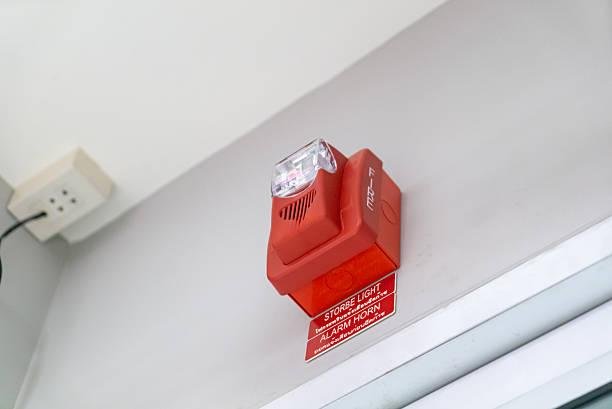
A smoke detector that just beeps is better than nothing. But "better than nothing" isn't really a standard you want to rely on when your building is empty at 2 a.m. and something starts burning in the electrical room. That's the gap professional monitoring fills. If you've never set up a monitored system before, the whole thing can feel murky. What exactly does a monitoring company do? Do you legally need it? What's the difference between a $15-a-month plan and a $150-a-month plan? This guide walks through all of it, in plain language, so you can make a real decision without getting lost in sales jargon. If you're already looking at local options, Fire Alarm Monitoring Services in San Francisco CA is a good starting point to understand what a full-service provider actually offers.
What Fire Alarm Monitoring Actually Is
Most people picture a fire alarm as a box on the wall that makes noise. That's a standalone system. It sounds locally, meaning people in the building hear it, and that's it. Nobody calls the fire department. Nobody checks whether it's a real fire or a burnt bagel. You're counting on whoever happens to be nearby to do something.
Monitored fire alarm systems are different. Your alarm panel connects to a central monitoring station, which is a staffed facility that receives signals from thousands of buildings around the clock. The moment your detector trips, a signal goes out. A real person at that station gets it. They follow a specific protocol, which usually means trying to reach you or a designated contact first, then dispatching the fire department if they can't confirm it's a false alarm. The whole sequence can take under two minutes.
That difference matters a lot in a building that isn't always occupied. Warehouses, offices, apartment complexes after hours, retail spaces at night. Nobody's there to call 911. The monitoring station is, in effect, your always-on backup.
How the Signal Gets from Your Building to the Fire Department
Here's where a lot of building owners get fuzzy on the details. The path from "detector trips" to "fire truck dispatched" has a few steps, and the reliability of each step depends on how your system is connected.
Types of Monitoring Connections
Old systems used a dedicated phone line, sometimes called a POTS line (plain old telephone service). It worked fine for decades. But phone infrastructure is being retired in many cities, and a cut phone line means your signal never gets out. Not great.
Cellular connections are now the most common and generally the most reliable option. Your panel talks to the monitoring station over a cellular network, the same way your phone does. No physical line to cut. No dependence on your internet provider staying up. Most modern installs use cellular as the primary path, sometimes with a second backup channel.
Internet-based (IP) connections are faster and cheaper to run, but they go down when your network goes down. Power outage, router failure, ISP problem. For that reason, IP monitoring is usually paired with cellular as a redundant backup rather than used alone. The NFPA 72 standard for fire alarm systems sets requirements around signal transmission paths, and a good provider will be familiar with those rules and follow them.
Who Is Required to Have Monitored Fire Alarms
Short answer: more people than expect it. The full answer depends on your jurisdiction, your building type, and how many people occupy the space.
Generally speaking, monitored systems are required for multi-unit residential buildings above a certain number of units (often five or more in California), commercial buildings above a certain square footage, schools, healthcare facilities, hotels, and any building where occupants may be asleep or unable to self-evacuate quickly. Local fire codes get specific, and San Francisco has its own amendments layered on top of state and national codes.
If you're not sure whether your building is covered by a requirement, the simplest move is to call your local fire marshal's office or ask a licensed fire alarm contractor to do a code review. Don't guess. A missed requirement can mean fines, failed inspections, or worse, liability if something goes wrong. Fire Alarm Monitoring in San Francisco CA is subject to both state and local rules, so it's worth getting someone who knows the local code landscape to weigh in.
What a Central Monitoring Station Does (And Why UL Listing Matters)
Not all monitoring stations are the same. Some are large, well-staffed operations with redundant power, backup generators, and geographically separate backup facilities. Others are smaller operations with fewer safeguards. This is where UL listing becomes important.
A UL-listed monitoring center has been independently evaluated by Underwriters Laboratories and meets specific standards for staffing, response time, equipment, and backup systems. Many insurance companies and fire code authorities require your monitoring provider to be UL-listed. It's not just a marketing badge. It means someone outside the company has verified they can actually do the job reliably.
Locally, CA FIRE ALARM INC is one company that handles both the installation side and monitoring coordination for commercial and residential properties in the Bay Area, which can simplify the process of making sure your panel and your monitoring service are actually compatible with each other.
Response time is the other thing to pin down. Ask specifically: how long does it take from signal receipt to the point where the fire department is called? Some contracts are vague on this. Push for a specific number, and find out what happens when your primary contact doesn't answer.
Questions to Ask Before You Sign Anything
Signing a multi-year monitoring contract without asking the right questions is a pretty easy way to end up stuck with a provider that doesn't fit your building's needs. Here are the things worth asking directly.
-
Is your monitoring center UL-listed, and can you provide documentation?
-
What's the guaranteed response time from signal receipt to dispatch?
-
What connection type does my system use, and what's the backup if that connection fails?
-
Does this contract cover parts and labor for service calls, or is that billed separately?
-
What happens to my contract if I sell the building?
-
How do you handle false alarms, and do you charge for repeated false alarm dispatches?
-
Are you familiar with San Francisco's specific fire code amendments?
A provider who gets annoyed by these questions is a provider worth avoiding. The good ones will answer all of it without hesitation. Fire Alarm Monitoring in San Francisco CA has enough providers operating in the market that you shouldn't have to settle for vague answers.
A Few Practical Things to Know Before You Start
Getting set up with monitoring isn't usually a same-day thing. Your existing alarm panel needs to be compatible with the monitoring service, or you may need an upgrade. That's a conversation to have early, not after you've already signed a contract.
Also, plan for regular testing. Most monitored systems need an annual inspection, and in some cases quarterly tests, depending on building type and local code. Those inspections aren't optional. They're what keeps your system legally compliant and, more practically, actually working when it needs to.
One more thing: give your monitoring provider accurate contact information for your building's responsible parties, and keep it updated. If your property manager changes, or your emergency contact moves to a new number, update the station. A signal that reaches a disconnected number doesn't do anyone any good.
Frequently Asked Questions
What's the difference between a monitored fire alarm and a regular smoke detector?
A regular smoke detector makes noise locally when it detects smoke. That's it. A monitored fire alarm sends a signal to a staffed central station, which then contacts you and dispatches emergency services if needed. The monitoring happens whether or not anyone is in the building at the time.
Do I legally need monitored fire alarm monitoring for my building?
It depends on your building type, size, and location. In California, multi-unit residential buildings, commercial properties above certain thresholds, schools, and healthcare facilities are commonly required to have monitored systems. San Francisco also has local amendments that can expand those requirements. Check with your local fire marshal or a licensed contractor to get a straight answer for your specific property.
How much does fire alarm monitoring typically cost?
Monthly monitoring fees vary a lot. Residential or small commercial setups might run $25 to $60 per month. Larger commercial buildings with more complex systems can be significantly higher. The monitoring fee is separate from installation costs and any service or inspection fees, so get a full breakdown before you commit.
What does it mean for a monitoring center to be UL-listed?
It means the facility has been independently audited by Underwriters Laboratories and meets specific standards for equipment, staffing, response time, and backup systems. Many insurers and local fire codes require a UL-listed provider. It's a meaningful credential, not just a sticker on the door.
Can I switch monitoring providers if I'm unhappy with my current one?
Usually, yes, but check your contract first. Many monitoring agreements run one to three years and include early termination fees. Some contracts also include a right to match any competing offer before you can leave. Read the cancellation terms before you sign, not after you want out.
Getting the right monitoring setup in place doesn't have to be complicated, but it does take a bit of homework upfront. Ask the right questions, understand what you're paying for, and make sure whoever you hire knows your local code requirements. That's pretty much it. The Fire Alarm Monitoring Services in San Francisco CA market has solid options available, so you don't need to settle for a provider who can't give you straight answers.

 English
 Arabic
 French
 Spanish
 Portuguese
 Deutsch
 Turkish
 Dutch
Dutch
 Italiano
 Romaian
 Portuguese (Brazil)
 Greek
Greek