

Screen Printing vs DTG: Which Should You Choose?
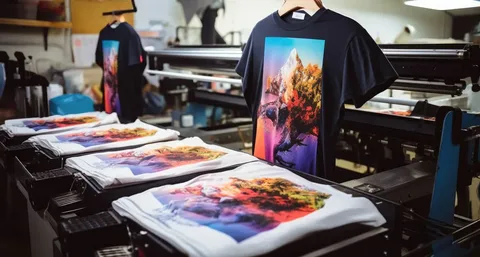
Picking the wrong print method can wreck your budget or leave you with shirts that look nothing like you imagined. It happens more than people expect. Screen printing and direct-to-garment (DTG) printing both produce great results, but they're built for very different situations. Knowing which one fits your order before you place it saves real money and a lot of frustration. If you're looking for T-Shirts Printing Services in Dallas TX, understanding this difference is the first call you should make. This article breaks down how each method works, what it costs, and where each one shines or falls short.
How Each Method Actually Works
Screen printing is old-school in the best way. A design gets separated into individual colors, and each color gets its own stencil (called a screen). Ink is then pushed through those screens onto the fabric one layer at a time. The result is thick, opaque, almost tactile ink sitting right on top of the shirt. It's a physical process with real setup time involved.
DTG is basically an inkjet printer built for fabric. The shirt goes flat on a platen, the machine reads your digital file, and it sprays ink directly into the fibers. No screens, no setup by hand. You can run one shirt as easily as a hundred. But the machine needs the garment to be pretreated first, especially on dark shirts, which adds a step most people don't think about going in.
Order Size and What It Does to Your Cost
This is where the two methods split hardest. Screen printing has upfront setup costs because each color in your design needs its own screen burned. That cost gets spread across the full order. So the more shirts you print, the cheaper each one gets. A run of 50 shirts might cost you $8 each. A run of 500 could drop that to $3 or less per shirt. Small runs? Painful.
DTG flips that completely. There's almost no setup cost per job, so the price per shirt stays pretty flat whether you're printing 1 or 30. That makes it perfect for short runs, one-offs, or sample orders. But if you're printing 200 shirts of the same design, screen printing will almost always beat DTG on total price. Worth doing the math before you commit.
A good rule of thumb most printers use: under 24 pieces, go DTG. Over 48, screen printing usually wins on cost. That middle range is where you actually have to think about it.
Print Quality and Color Handling
Screen printing produces colors that pop hard. Because the ink sits on top of the fabric rather than soaking in, you get rich, solid tones that look exactly like your brand colors. It's very consistent across a big run too, which matters if you're ordering shirts for a team or an event. But here's the catch: every color in your design costs more. A six-color logo costs more than a two-color one. And gradients? Tricky. Not impossible, but they require halftone techniques that can look a bit grainy up close.
DTG handles full-color artwork and gradients without breaking a sweat. It reads your file and prints every shade exactly as it appears on screen. Photorealistic images, watercolor-style art, complex illustrations with dozens of colors. None of that adds to the cost. The tradeoff is that colors tend to look a bit softer, especially on dark shirts, because the ink blends into the fabric rather than sitting on top of it.
For logos with two or three solid colors, screen printing usually looks sharper. For detailed artwork or photos, DTG is the smarter pick.
Fabric and Shirt Color Compatibility
Both methods work on cotton. That's where the agreement ends. Screen printing can go on cotton, polyester, blends, nylon, and more. DTG is much pickier. It works best on 100% cotton or high-cotton blends. Polyester-heavy fabrics don't absorb the ink the same way, and you end up with a washed-out print that looks faded straight out of the box.
Shirt color matters too. Screen printing handles dark shirts easily because the inks are opaque enough to cover the fabric. DTG needs a white or light-colored base to show colors accurately. On dark shirts, DTG machines lay down a white underbase first, which works fine but adds cost and sometimes affects the feel of the print. Light-colored shirts on either method? You're probably fine either way.
If you're doing T-Shirts Printing in Dallas TX on performance fabrics or moisture-wicking materials, screen printing is almost always the better fit. DTG and synthetics don't get along well.
Durability: Which Print Lasts Longer?
Honestly, both methods hold up well if the shirts are cared for properly. But there are differences worth knowing. Screen printing ink, once cured with heat, bonds tightly to the fabric surface. It can last for years of regular washing without major fading. The ink may crack slightly over time on areas that get a lot of flex, like across the chest, but that usually takes a while.
DTG prints soak into the fibers, which means there's nothing raised to crack. But they can fade faster if you wash them in hot water or throw them in a high-heat dryer repeatedly. Cold wash, inside out, low heat drying. That's the move for DTG shirts. Follow those steps and they hold up fine for a long time.
For workwear or uniforms that get washed constantly and roughly, screen printing tends to outlast DTG. For casual wear, the difference is less dramatic. If your shirts are for everyday casual wear and won't be laundered five times a week, DTG durability is totally reasonable.
If you're unsure which option fits your specific order, SWAG STORE is one shop that handles both methods and can help you figure out which direction makes sense before you spend a dollar.
A Quick Side-by-Side Summary
-
Best for large orders: Screen printing. The per-unit cost drops significantly at volume.
-
Best for small or one-off orders: DTG. No setup fees, no minimums at most shops.
-
Best for photorealistic or multi-color art: DTG. It handles complexity without extra charges.
-
Best for solid, bold colors: Screen printing. Ink sits on top and pops harder.
-
Best for dark shirts: Screen printing, or DTG with a white underbase.
-
Best for polyester or blended fabrics: Screen printing, hands down.
-
Best for long-term durability under heavy washing: Screen printing, generally.
Neither method is universally better. The right one depends entirely on your order. T-Shirts Printing in Dallas TX shops will usually ask you a handful of questions before recommending one over the other, and that's exactly what they should do.
Frequently Asked Questions
Can I mix screen printing and DTG in the same order?
Usually not in a single production run, but some shops will let you split an order into two separate jobs. It's worth asking, especially if part of your order is a large run and part of it is a small custom batch. Just know you'll likely pay setup fees for each method separately.
Is DTG printing good for dark-colored shirts?
It can work, but the machine has to lay down a white underbase before printing your design on top of it. That adds a step, sometimes adds cost, and can make the print feel a bit heavier on the shirt. Results vary a lot by machine and operator. If dark shirts are the main event, screen printing is usually the cleaner choice.
How many colors can I use in a screen print design?
Technically as many as you want, but each color adds a setup fee and increases cost per shirt. Most shops cap affordable screen printing at six to eight colors. Anything beyond that, DTG is probably cheaper and easier for your design.
Which method is better for a one-time event shirt?
DTG almost every time. If you need 10 or 15 shirts for a birthday, reunion, or company outing, the screen printing setup cost makes the per-shirt price too high to justify. DTG keeps it affordable at low quantities with no minimums at most print shops.
Do I need to send a special file type for each method?
For screen printing, vector files like AI or EPS work best because each color needs a clean, separated layer. For DTG, a high-resolution PNG with a transparent background is usually what shops ask for. Always check with your printer before sending files so you don't have to redo artwork after the fact.
The bottom line is pretty simple: think about your quantity, your design complexity, your fabric, and how hard those shirts are going to get washed. Those four things will point you toward the right method almost every time. And if you're still not sure, just call the shop and describe your order. A good T-Shirts Printing Services in Dallas TX provider will give you a straight answer without pushing you toward the pricier option.

 English
 Arabic
 French
 Spanish
 Portuguese
 Deutsch
 Turkish
 Italiano
 Russian
 Romaian
 Portuguese (Brazil)
 Greek
Greek