

Poker Strategy Training: How to Identify and Play the Best Hand Like a Pro
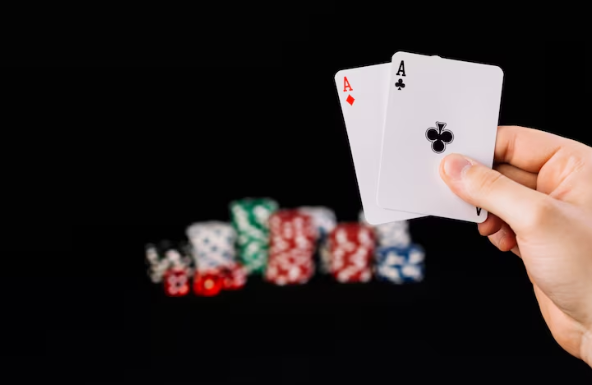
Poker is a game where skill, psychology, and probability intersect. While luck plays a role in the short term, long-term success depends heavily on poker strategy training and a deep understanding of how to recognize and play the best hand in every situation. Whether you’re a beginner learning the fundamentals or an experienced player refining advanced tactics, mastering strategy and hand selection is essential for consistent profitability.
This article explores how poker strategy training helps players identify the best hand, make smarter decisions, and outperform opponents across cash games and tournaments.
Why Poker Strategy Training Matters
Poker is not simply about the cards you’re dealt—it’s about how you play them. Poker strategy training teaches players how to think critically, manage risk, and make mathematically sound decisions. Without structured training, many players rely on intuition alone, which often leads to costly mistakes.
Effective poker strategy training focuses on:
- Understanding hand strength and relative value
- Reading opponents and betting patterns
- Knowing when to fold, call, or raise
- Adjusting strategy based on position and table dynamics
When combined, these skills allow players to consistently extract value from strong hands and minimize losses with weaker ones.
Understanding the Concept of the Best Hand
At its core, poker revolves around creating the best hand possible from your cards and the community cards (in games like Texas Hold’em). However, the best hand is not always the highest-ranked hand—it’s the hand most likely to win given the situation.
For example:
- A pair of aces may be the best hand pre-flop
- A flush draw might be stronger than top pair if it has high implied odds
- A modest hand can become the best hand if opponents show weakness
Poker strategy training helps players move beyond basic hand rankings and evaluate hands contextually.
Hand Rankings: The Foundation of Strategy
Before advanced strategies can be applied, players must thoroughly understand standard hand rankings. Knowing whether your hand beats an opponent’s range is crucial.
From strongest to weakest, the traditional poker hand hierarchy includes:
- Royal flush
- Straight flush
- Four of a kind
- Full house
- Flush
- Straight
- Three of a kind
- Two pair
- One pair
- High card
While memorizing these rankings is essential, poker strategy training emphasizes how often these hands occur and how to play them profitably in real games.
Position and the Best Hand Advantage
One of the most overlooked aspects of poker strategy training is the importance of position. Acting later in a betting round gives players more information, which can turn a marginal holding into the best hand.
For example:
- A medium-strength hand in late position may be stronger than a premium hand played out of position
- Bluffing opportunities increase when you act last
- Value betting becomes more precise with positional advantage
Understanding position allows players to play more hands confidently while maintaining control over the pot.
Starting Hands and Strategic Selection
One of the first lessons in poker strategy training is learning which hands to play and which to fold. Playing too many hands is a common beginner mistake that quickly erodes bankrolls.
Strong starting hands often include:
- High pairs
- High suited connectors
- Strong Broadway cards
However, the best hand pre-flop doesn’t guarantee post-flop success. Training teaches players how to adjust starting hand ranges based on:
- Table aggressiveness
- Stack sizes
- Tournament vs cash game formats
Reading Opponents to Identify the Best Hand
Poker is a game of incomplete information, which makes opponent analysis critical. Poker strategy training emphasizes reading betting patterns, timing tells, and behavioral tendencies to estimate what hand an opponent might hold.
Key indicators include:
- Bet sizing consistency
- Sudden aggression or passivity
- Reactions to board texture changes
By narrowing down an opponent’s range, players can better determine whether their own hand is likely the best hand—or if folding is the smarter move.
Betting Strategy and Maximizing Value
Having the best hand is only profitable if you extract value from it. Poker strategy training teaches optimal betting techniques to build pots without scaring opponents away.
Important concepts include:
- Value betting versus bluffing
- Continuation bets
- Check-raising
- Pot control
Learning when to slow-play a strong hand and when to bet aggressively is a hallmark of advanced poker strategy training.
Bluffing and Representing the Best Hand
Interestingly, poker strategy training also covers situations where you don’t have the best hand—but can convincingly represent one. Successful bluffing requires:
- A believable story based on betting history
- Awareness of board texture
- Understanding opponent tendencies
Bluffing should complement solid hand play, not replace it. Well-trained players bluff selectively and with purpose.
Tournament vs Cash Game Hand Strategy
The concept of the best hand changes depending on the game format. Poker strategy training highlights these differences clearly.
In cash games:
- Hand value remains consistent
- Stack sizes are deeper
- Patience is rewarded
In tournaments:
- Stack preservation is critical
- Short stacks increase hand value volatility
- Aggression often outweighs pure hand strength
Adapting hand strategy to the format is essential for long-term success.
Continuous Improvement Through Training
Poker is constantly evolving. New strategies, trends, and player styles emerge over time. Ongoing poker strategy training helps players stay competitive by refining decision-making and expanding hand-reading skills.
Training methods may include:
- Hand history analysis
- Mental game development
- Simulation and scenario review
- Strategic repetition and discipline
The more time invested in structured training, the easier it becomes to recognize the best hand in complex situations.
Conclusion
Winning at poker consistently requires far more than luck. Through focused poker strategy training, players learn how to identify, evaluate, and maximize the value of the best hand in every scenario. From understanding hand rankings and position to reading opponents and mastering betting strategies, training transforms poker from a guessing game into a skill-based pursuit.
By committing to continuous learning and disciplined play, players can sharpen their instincts, reduce costly errors, and gain a lasting edge at the table. In poker, the best hand isn’t just the cards you hold—it’s the decisions you make.

 English
 Arabic
 French
 Portuguese
 Deutsch
 Turkish
 Dutch
Dutch
 Italiano
 Russian
 Romaian
 Portuguese (Brazil)
 Greek
Greek