

FWB Meaning: What Does FWB Mean in Text?
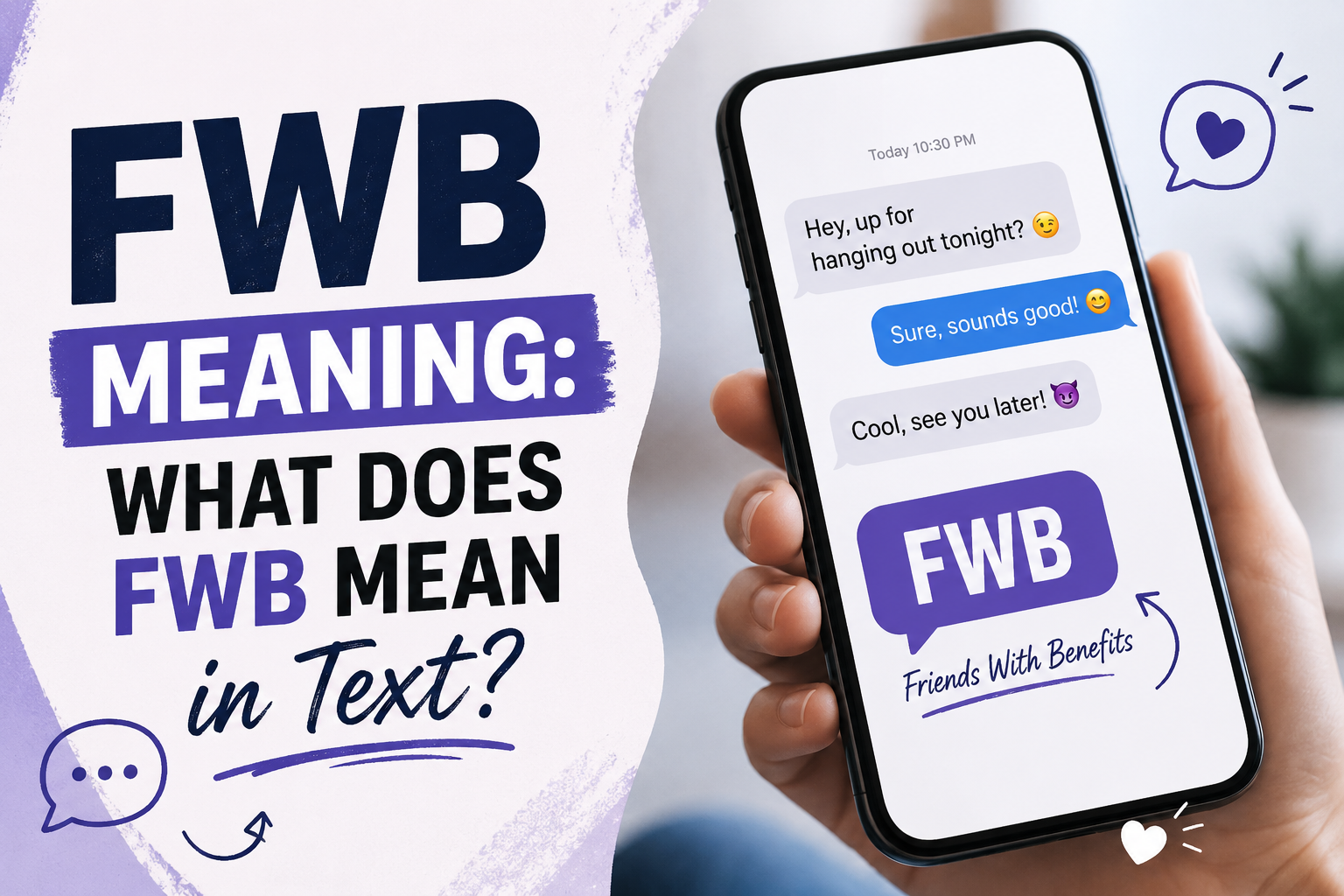
If you've come across the term FWB in your teen's messages or on social media and wondered what it means, you're not alone. Internet lingo changes rapidly, and it can be overwhelming for parents to keep up.
In this post, we'll explore the FWB meaning, how it's used, and why parents should be aware of it when their children are online.
What Does FWB Mean?
FWB stands for Friends With Benefits. A friendship between friends that is sexual in nature, but devoid of romantic feelings. Both parties get the "privileges" of being together without taking on any of the "burden" of "dating".
It is a popular word in texting, social media, and dating apps, typically used by teenagers and young adults.
How Is FWB Used in Texts?
Below are some basic examples of how FWB manifests in everyday dialogue:
-
We're not dating, we are only FWB.
-
I don't want something serious; I want FWB.
-
They've met on a dating site and are FWB.
It can be seen in direct messages, social media bios, dating profiles, and group chats.
Related Slang Terms You Should Know
FWB often comes up alongside other abbreviations with similar meanings:
-
NSA – No Strings Attached (similar to FWB, no emotional connection)
-
ONS – One Night Stand (a single casual encounter)
-
MBA – Married But Available (a person seeking a relationship outside of marriage)
Is FWB Safe for Kids?
Simply put, FWB is not suitable for children and young teens. This term could allow children to see or come into contact with adult conversation, peer pressure, or they might meet strangers who take advantage of the situation.
The emotional and physical impact of FWB might be too deep for children to comprehend, leaving them open to being vulnerable to it.
If you notice this word in your child's text messages or online behavior, it's a great opportunity as a parent to engage in a non-threatening, down-to-earth discussion about relationships, boundaries, and online safety.
Final Thoughts
FWB describes a casual physical relationship that doesn't involve any feelings of commitment. It's safe for adults, but presents real dangers to teens who encounter or adopt it into their online lives.
Understanding the slang your child uses is a small but powerful step in keeping him or her safe online. It's becoming easier every day thanks to tools like Saferloop. It is a parental control app that helps you monitor your child's online activity across devices without invading their privacy unnecessarily.

 English
 Arabic
 French
 Spanish
 Portuguese
 Deutsch
 Dutch
Dutch
 Italiano
 Russian
 Romaian
 Portuguese (Brazil)
 Greek
Greek