

5 Hardware Facts Every Leash Buyer Must Check First
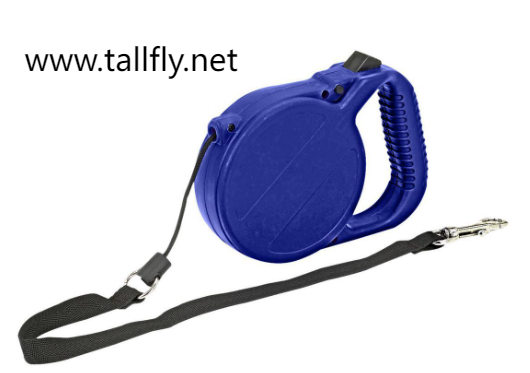
When a large dog lunges unexpectedly at full speed, the entire force of that movement transfers through one small metal component — the snap hook connecting the Dog Leash to the collar or harness. Despite this critical role, hardware is consistently the least scrutinized element in leash purchasing decisions, overshadowed by attention to webbing color, length, and price. Yet industry warranty data and field failure reports consistently point to hardware failure as the primary mechanism through which leashes release dogs in uncontrolled situations, with consequences ranging from minor inconvenience to serious injury.
Snap Hook Mechanics and Gate Failure Modes
The snap hook — also called a bolt snap or trigger snap depending on its gate mechanism — functions through a spring-loaded gate that opens under finger pressure and closes automatically when released. The gate spring is the component most subject to fatigue failure over the product's service life. A spring that loses tension gradually allows the gate to open under lateral force, a condition that may not be apparent during normal handling but activates precisely when a dog is pulling hard and the connector is under load.
Bolt snap designs lock the gate with a sliding collar that must be retracted before the gate can open. This secondary locking mechanism substantially reduces accidental release risk under lateral load, making bolt snaps the preferred hardware type for working dog handlers, trainers, and owners of powerful breeds. The locking collar itself must be manufactured to close tolerances; excessive clearance between collar and barrel allows the collar to shift under vibration, partially unlocking the gate during activity.
Material Selection for Hardware Components
Zinc alloy (zamak) hardware dominates the entry-level leash market due to its low cost and ease of pressure casting. Its primary weakness is susceptibility to corrosion, particularly in salt-air coastal environments and chlorinated pool areas, where zinc oxide formation accelerates rapidly. Surface plating — nickel, chrome, or black oxide finishes — provides some protection but is a surface treatment rather than a material solution; once plating is scratched or worn, the base zinc corrodes at normal rates.
Stainless steel hardware eliminates the corrosion vulnerability of zinc at a significantly higher material and machining cost. The 316-grade stainless steel used in marine hardware applications provides the highest corrosion resistance available in standard leash hardware and is the appropriate specification for ocean-environment or heavily water-exposed applications. Solid brass hardware occupies a mid-range position: its corrosion resistance is substantially better than zinc, its machinability allows for complex snap geometries, and its traditional appearance suits premium or heritage-positioned products.
Swivel Rings and Torsional Management
Swivel rings — rotating connectors placed between the snap hook and the leash webbing — serve the critical function of absorbing torsional load when a dog rotates or circles during walking. A leash without a functional swivel develops cumulative twist in the webbing that concentrates stress at the hardware attachment points, accelerating thread failure and stitching degradation at both ends of the leash.
The rotating element in a swivel ring operates through a ball-bearing or friction-fit mechanism. Ball-bearing swivels rotate freely under load, providing the best torsional relief; friction-fit designs resist rotation under high load, partially defeating their purpose under the conditions where they are most needed. Swivel ring testing should verify smooth rotation through the full torque range a dog can realistically apply, not merely under no-load conditions.
D-Ring Geometry and Load Distribution
D-rings welded or cast into collar attachments distribute load across the full interior curve of the ring rather than concentrating it at a single point. Ring cross-section diameter directly affects load capacity: a 6mm cross-section ring carries substantially more load before deformation than a 4mm equivalent in the same alloy. The weld quality at D-ring attachment points on harnesses represents another hardware failure risk that is invisible externally but determines whether the ring separates from the harness under sudden dynamic loading.
Taizhou Opey Pet Products Co., Ltd. conducts gate cycle testing, spring tension verification, and corrosion resistance assessment on hardware from every incoming supplier batch, refusing components that fall outside defined tolerance ranges regardless of unit price advantages, because hardware quality at the component level determines final product safety in ways that assembly inspection alone cannot catch. Sourcing buyers and product developers who want to understand hardware specification options and testing standards in detail can access comprehensive product documentation at https://www.tallfly.net/ .

 English
 Arabic
 French
 Spanish
 Portuguese
 Deutsch
 Turkish
 Dutch
Dutch
 Italiano
 Russian
 Portuguese (Brazil)
 Greek
Greek