

Factors That Affect the Quality of Brass Extrusion Rods
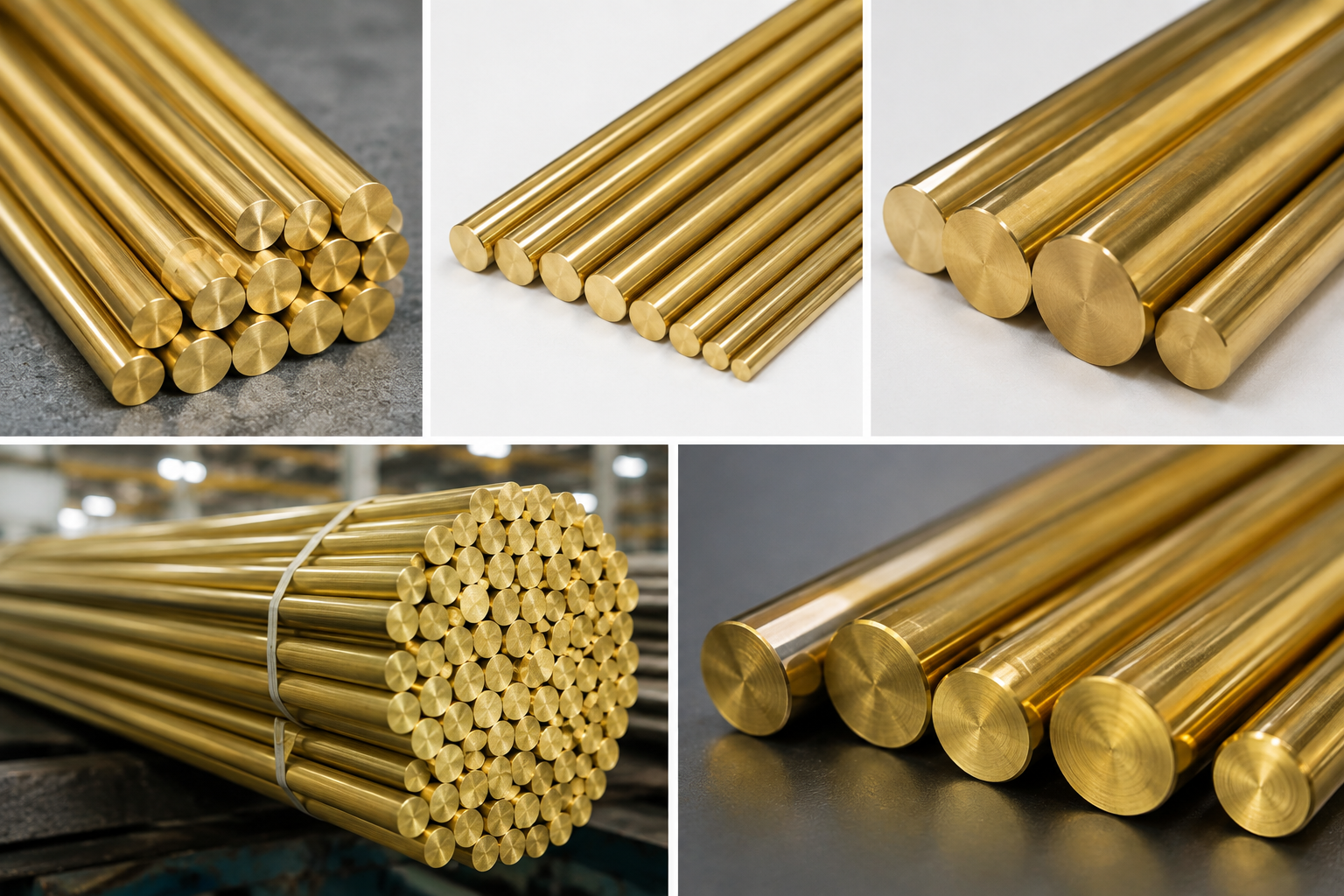
Precision engineering depends on materials that can deliver accuracy, consistency, and reliable performance across different manufacturing processes. From small mechanical components to electrical fittings, the choice of raw material can directly affect the quality of the finished product. Brass is widely valued in this field because it combines strength, corrosion resistance, good machinability, and dimensional stability. These properties make brass suitable for applications where components need to perform consistently under demanding conditions.
A Brass Extrusion Rod is produced by forcing heated brass through a specially designed die to create a continuous profile with a controlled shape and size. This extrusion process helps achieve uniform dimensions and a consistent surface finish, making the material suitable for precision machining. Depending on the required application, rods can be further processed through cutting, turning, drilling, threading, or other machining operations to create accurately manufactured components.
Why Brass Is Suitable for Precision Engineering
Brass offers a useful combination of mechanical and manufacturing properties. Its excellent machinability allows cutting tools to work efficiently while producing clean and accurate components. This is particularly important when manufacturing parts with fine threads, narrow tolerances, grooves, holes, and detailed profiles.
The material also provides good resistance to corrosion, which can help components maintain their functional properties in environments where moisture or other corrosive elements may be present. Its relatively stable dimensional behavior further supports applications where accuracy is important.
Another advantage is brass's attractive surface appearance. Even when appearance is not the primary consideration, a clean and consistent surface can contribute to the overall quality of finished components.
Consistency in Manufacturing
Precision engineering requires more than simply selecting a strong material. Consistency from one production batch to another is equally important. Extrusion helps create long lengths of material with a relatively uniform cross-section, reducing variations that could affect subsequent machining operations.
Consistent dimensions can make production planning easier because manufacturers can work with predictable raw material sizes. This is especially useful for components that are produced in large quantities or require repeatable machining processes. A uniform starting profile can also reduce unnecessary material removal during machining.
Improved Machining Performance
Machinability is one of the main reasons brass is frequently used for precision components. When brass rods are machined correctly, they can produce clean cuts and well-defined shapes. This makes them suitable for components that require detailed features or accurate dimensions.
Machining performance can also influence tool wear, production efficiency, and finished surface quality. With an appropriate brass grade and suitable machining conditions, manufacturers can produce reliable components while maintaining the required dimensional accuracy.
Applications in Precision Components
Extruded brass rods are used across several engineering sectors. They can be machined into electrical terminals, connectors, fasteners, valve components, fittings, bushings, shafts, pins, and other mechanical parts.
In electrical applications, brass is valued for its electrical conductivity and ability to provide reliable connections. In mechanical systems, its strength, machinability, and corrosion resistance make it useful for components that need both durability and dimensional precision.
The versatility of brass also allows manufacturers to create different component geometries without changing the fundamental raw material. This makes it practical for both simple and more detailed engineering parts.
Importance of Dimensional Accuracy
Small dimensional differences can have a significant effect on precision components. If a part does not match the required dimensions, it may lead to poor fitting, vibration, leakage, or premature wear. For this reason, the quality of the extruded material is an important consideration before machining begins.
A well-controlled extrusion process helps maintain consistent diameter, profile, and surface characteristics. Manufacturers can then use machining operations to achieve the final specifications required for individual components. Proper inspection at different stages further supports consistent production quality.
Surface Finish and Component Quality
Surface finish can influence both appearance and functionality. Components used in moving assemblies may require smooth surfaces to reduce friction, while threaded or fitted parts need clean profiles for proper assembly.
Brass can provide a good starting surface for finishing and machining operations. Depending on the final application, components may also undergo polishing, plating, coating, or other finishing treatments. These processes can improve appearance, surface protection, or functional performance.
Supporting Efficient Precision Manufacturing
The role of extrusion extends beyond producing a convenient raw material shape. It creates a foundation for efficient downstream manufacturing. When the starting material has consistent dimensions and suitable machinability, machining processes can be planned more effectively.
This can help manufacturers maintain repeatability across production runs while reducing challenges associated with inconsistent raw material. For precision engineering, where every component needs to meet defined specifications, this consistency is highly valuable.
Conclusion
Brass extrusion rods play an important role in precision engineering because they provide a dependable combination of machinability, dimensional consistency, corrosion resistance, and mechanical performance. Their uniform profiles make them suitable for further machining into components used in electrical, mechanical, automotive, plumbing, and industrial applications.
As engineering requirements continue to demand greater accuracy and reliable component performance, selecting a suitable starting material remains essential. Brass, supported by a controlled extrusion process, offers a practical foundation for producing precise and durable components across a wide range of manufacturing applications.

 English
 Arabic
 French
 Spanish
 Portuguese
 Turkish
 Dutch
Dutch
 Italiano
 Russian
 Romaian
 Portuguese (Brazil)
 Greek
Greek