

Miniature Paintings in Lahore: A Beginner's Guide to One of Pakistan's Oldest Art Forms
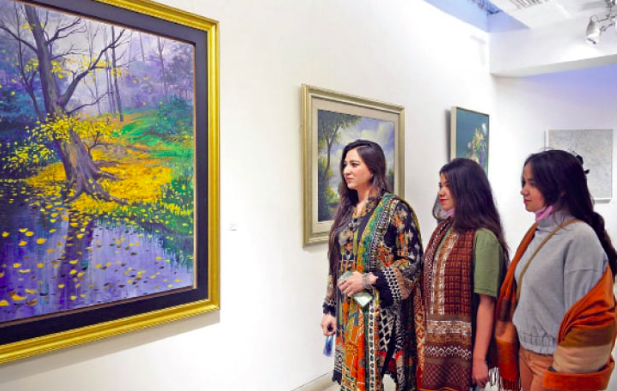
Of all the styles of painting you'll come across in Lahore, miniature painting is probably the one with the deepest roots. It's also one of the most misunderstood — people often assume "miniature" just means small, when really it refers to a whole tradition of technique, materials, and discipline that goes back centuries. If you've seen a miniature painting in a gallery and wondered what actually makes it different from any other detailed artwork, this is a good place to start.
What Miniature Painting Actually Is
Miniature painting is a traditional art form that reached its peak during the Mughal era, roughly the 16th to 18th centuries, when court artists produced intricate, small-scale paintings for manuscripts, portraits, and decorative works. The word "miniature" here doesn't just describe size — it comes from the Latin "minium," a red pigment historically used in manuscript illustration, and later came to describe this specific, highly detailed painting tradition more broadly.
What sets miniature painting apart is the process. Traditional miniatures are painted using natural pigments, often applied with extremely fine brushes — sometimes made from just a few hairs — onto specially prepared surfaces like wasli paper, which is built up in layers and burnished until smooth. The result is work with an extraordinary level of detail: intricate patterns, fine linework, and rich color built up slowly, layer by layer, rather than painted quickly.
Why Lahore Is Closely Tied to This Tradition
Lahore has a particularly strong connection to miniature painting because of its Mughal history — the city was an important center under Mughal rule, and that legacy shaped its art education for generations afterward. Lahore's National College of Arts is widely recognized for its miniature painting department, and many contemporary artists working in this tradition today trained there, learning the same core techniques that were used centuries ago.
This training pipeline matters, because it means miniature painting in Lahore isn't just preserved as a historical curiosity — it's an active, evolving practice. Some artists keep the tradition close to its classical roots, working within the same formal conventions as centuries-old manuscripts. Others use the technique as a foundation and push it in more contemporary directions, addressing modern themes, personal narratives, or social commentary while still working with the traditional materials and precision the form demands.
Classical vs. Contemporary Miniature Work
If you're browsing miniature paintings for the first time, it helps to know there's a real range within the category:
Classical or traditional miniatures stay close to historical conventions — courtly scenes, floral borders, calligraphic elements, and subject matter drawn from historical or literary sources. These pieces are often valued for their technical precision and connection to the original tradition.
Contemporary miniatures use the same painstaking technique and materials but apply them to modern subjects — anything from personal identity and urban life to political commentary. This branch of miniature painting has actually become one of the more internationally recognized threads of contemporary Pakistani art, precisely because it takes a centuries-old discipline and points it at present-day ideas.
Neither approach is more "authentic" than the other. Both require the same level of technical skill; they just differ in subject matter and intent.
What to Look for When Choosing a Miniature Painting
Precision and consistency of linework. Because miniature painting relies so heavily on fine detail, the quality of the linework is one of the clearest signs of skill. Look closely at borders, patterns, and small details — consistency here says a lot about the artist's training and patience.
Materials. Ask whether the piece uses traditional materials like wasli paper and natural pigments, or a more modern adaptation. Neither is wrong, but it's worth knowing what you're buying, especially if authenticity to the traditional process matters to you.
Composition and balance. Even within a small format, a strong miniature painting has a clear sense of composition — how elements are arranged, where your eye is drawn first, how positive and negative space are balanced.
Condition and framing. Because miniatures are often painted on paper rather than canvas, they can be more sensitive to humidity, light, and handling. Ask about proper framing and care, since paper-based works generally need more protection than oil on canvas.
The story behind the piece. Miniature painting is one of the styles where knowing a bit of context — the artist's training, the subject matter's significance, whether it follows a classical convention or breaks from it — genuinely adds to the experience of owning it.
A Living Tradition, Not Just a Historical One
It's easy to think of miniature painting as something that belongs in a museum, but that undersells what's actually happening with it today. Lahore's contemporary miniature artists are part of an ongoing conversation about Pakistani identity, history, and culture — using one of the country's oldest visual languages to say something distinctly modern. That combination of technical rigor and current relevance is part of why the form has held up so well, and why it continues to draw serious interest from collectors both in Pakistan and internationally.
If you want a broader sense of how institutions in Lahore support this kind of work — both the traditional and the contemporary — Ejaz Art Gallery has written about its role in promoting Pakistani art here, which touches on how galleries help keep traditions like this active rather than just preserved.
For anyone based in Lahore or planning a visit, ejazartgallery.com is worth a browse if you'd like to see how miniature work sits alongside portrait and contemporary painting in a working gallery collection.
Frequently Asked Questions
1. Does "miniature painting" always mean the artwork is small? Not strictly. While miniatures are typically compact compared to large canvases, the term refers more to the traditional technique, materials, and level of detail than to size alone.
2. What materials are used in traditional miniature painting? Classical miniature painting typically uses natural pigments and fine brushes applied to wasli paper, a specially prepared and burnished surface. Some contemporary artists adapt these materials while keeping the core technique intact.
3. Is miniature painting only historical, or are artists still working in this style today? It's very much a living practice. Many contemporary Pakistani artists trained in traditional miniature technique now use it to explore modern themes, and this contemporary miniature movement has gained real recognition internationally.
4. How should I care for a miniature painting once I own one? Since many miniatures are painted on paper rather than canvas, they're generally more sensitive to light, humidity, and handling than oil paintings. Proper framing with UV-protective glass and keeping the piece away from direct sunlight and damp conditions both help preserve it.
5. What's the difference between a classical and a contemporary miniature painting? Classical miniatures generally follow historical subject matter and conventions, such as courtly scenes or calligraphic elements. Contemporary miniatures use the same demanding technique but apply it to modern subjects, from personal narratives to social commentary.
6. Why is Lahore particularly known for miniature painting? Lahore's Mughal-era history and its strong art education institutions, particularly the miniature painting programs at its leading art college, have kept the tradition active and continuously trained new generations of artists in the technique.

 English
 Arabic
 French
 Spanish
 Portuguese
 Deutsch
 Dutch
Dutch
 Italiano
 Russian
 Romaian
 Portuguese (Brazil)
 Greek
Greek