

How Online Insurance Supports Malaysia
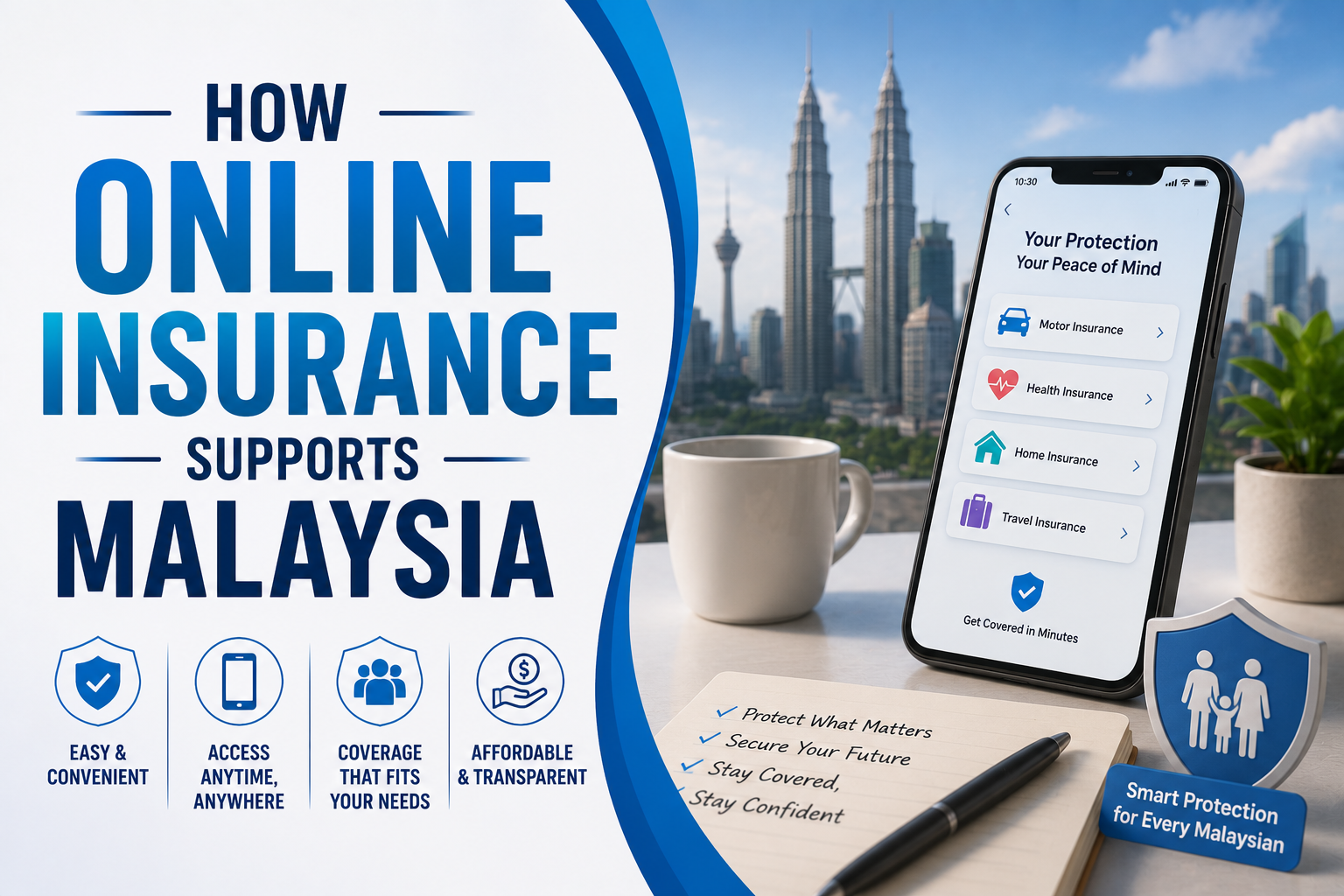
Online insurance is becoming more important in Malaysia as customers, businesses, and insurers move toward digital policy buying, renewal, onboarding, and claims support. Instead of depending only on branch visits or agent-led processes, customers can compare policies, submit details, complete verification, make payments, and manage coverage through websites, mobile apps, aggregators, bancassurance platforms, and embedded insurance channels. This shift is improving convenience across life, health, motor, travel, takaful, and commercial insurance products.
A published study by MarkNtel Advisors reports that the Malaysia online insurance sector was valued at USD 112 million in 2025. It is projected to grow from USD 123 million in 2026 to USD 187 million by 2032, registering a CAGR of around 7.23% during 2026–32. Motor insurance holds about 50% share, while large enterprises account for around 70% in 2026.
Digital Access Changes Buying Behavior
Malaysia’s online insurance growth is strongly linked with digital adoption. Customers increasingly expect financial services to be available through mobile apps, websites, and digital platforms. Insurance buying is also becoming more self-directed, with users comparing products, checking coverage terms, renewing policies, and submitting claims through digital channels.
The report highlights that expanding digital access and a tech-savvy population are key growth drivers. Malaysia’s digital policy direction under MyDIGITAL and the national digital economy blueprint supports wider use of digital services, including financial and insurance-related platforms.
Motor Insurance Leads Online Transactions
Motor insurance holds the largest share in Malaysia’s online insurance sector. This is because motor policies require regular renewal and are well-suited for digital distribution. Customers can compare prices, review policy details, renew coverage, and receive documents online, making the process faster and more convenient than traditional methods.
The MarkNtel report states that motor insurance accounts for about 50% share in 2026. This leadership is supported by repeat renewal behavior, digital payment options, comparison platforms, insurer mobile apps, and simplified policy issuance. Motor insurance therefore acts as an entry point for wider digital insurance adoption.
Large Enterprises Drive Premium Value
Large enterprises represent the leading customer type because they require broader insurance portfolios. Corporate buyers often need group life, health, property, liability, fleet, commercial, and business-related coverage. These policies usually involve higher premium values, making large enterprises important contributors to online insurance revenue.
The report states that large enterprises account for around 70% share in 2026. Their adoption is supported by digital portals, automated underwriting tools, integrated bancassurance systems, and structured policy management. For insurers, enterprise customers create demand for customized digital insurance solutions and efficient service platforms.
DITO Framework Supports Innovation
Regulation is helping shape Malaysia’s online insurance ecosystem. The report highlights the Digital Insurance and Takaful Operator framework as an important development that supports fully digital insurance and takaful business models. This creates space for digital-first providers to improve accessibility, transparency, onboarding, and product delivery.
Bank Negara Malaysia’s licensing framework for digital insurers and takaful operators supports regulated digital insurance activity. For customers, this can improve confidence in online insurance platforms because digital operators must work within a formal regulatory structure.
e-KYC Improves Digital Onboarding
Digital onboarding is one of the most important trends in Malaysia’s online insurance sector. e-KYC helps customers complete verification remotely without visiting a branch. This supports faster onboarding, smoother policy purchase, stronger fraud control, and better customer experience across online insurance platforms.
The report identifies rising adoption of e-KYC and digital onboarding as a key trend. Bank Negara Malaysia’s policy direction on electronic Know-Your-Customer helps financial institutions apply secure remote verification. This supports online insurance growth by reducing friction during customer registration and policy issuance.
Aggregators Improve Product Comparison
Insurance aggregators and comparison platforms are helping customers understand available products more easily. These platforms allow users to compare coverage, pricing, benefits, exclusions, and insurer options before purchasing. For categories such as motor, travel, health, and takaful, comparison tools can reduce confusion and increase transparency.
The report highlights the launch of insureKU as Malaysia’s fully digital insurance and takaful aggregator. Such platforms support online policy discovery by allowing customers to review multiple products in one place. This helps shift insurance from an agent-only model toward a more open digital marketplace.
Bancassurance Expands Digital Reach
Digital bancassurance is another important distribution channel because banks already have strong customer relationships and digital platforms. Insurance products can be offered through online banking, mobile banking, and financial service ecosystems. This makes insurance more accessible at moments when customers are already managing financial needs.
The report notes RHB Bank’s bancassurance and bancatakaful agreements with Tokio Marine Life Insurance Malaysia and Takaful Malaysia in 2025. Such partnerships can support wider digital insurance distribution by connecting insurer products with banking platforms and customer touchpoints.
Trust Remains a Key Challenge
Low consumer trust is a major challenge for online insurance. Customers may worry about policy complexity, fraud risk, data privacy, unclear terms, and limited human advisory support. Insurance products are often long-term and sensitive, so customers need confidence before buying digitally.
The report identifies low trust as a challenge that is also creating opportunities for transparency-led innovation. Clear product summaries, digital claims tracking, secure onboarding, AI-assisted service, and better policy explanations can help insurers improve confidence. Stronger regulation and transparent communication will remain important for wider online adoption.
AI Supports Better Insurance Services
Artificial intelligence is becoming useful in underwriting, fraud detection, claims assessment, customer support, and personalization. AI can help insurers process applications faster, identify unusual activity, recommend suitable products, and support digital service channels. This can improve efficiency while reducing delays in policy issuance and claims handling.
However, AI must be used carefully. Insurance decisions affect financial protection, so customers need fairness, privacy, and clarity. Insurers that combine automation with responsible governance can improve service speed without weakening trust.
Competitive Landscape Is Consolidated
The Malaysia online insurance sector is highly consolidated. The report states that the top five players collectively account for nearly 73% share of the organized online insurance ecosystem. Key players include Prudential Assurance Malaysia Berhad, AIA Bhd., Great Eastern Life Assurance Malaysia Berhad, Etiqa Life Insurance Berhad, Allianz Life Insurance Malaysia Berhad, Zurich Life Insurance Malaysia Berhad, Manulife Insurance Berhad, Tokio Marine Life Insurance Malaysia Bhd., FWD Insurance Berhad, and Sun Life Malaysia Assurance Berhad.
Competition is shaped by digital platforms, bancassurance networks, product portfolios, customer trust, mobile-first services, claims experience, and online distribution strength.
Outlook for Online Insurance in Malaysia
Malaysia’s online insurance sector is expected to grow steadily through 2032, supported by digital adoption, regulatory reforms, online renewal behavior, e-KYC, insurance aggregators, bancassurance platforms, and enterprise demand. Motor insurance will continue to hold a strong role because its renewal pattern fits digital channels well.
Future growth will depend on trust-building, transparent product design, secure onboarding, mobile-first service, AI-enabled claims support, and wider digital partnerships. Insurers that combine convenience, compliance, customer education, and reliable digital experiences will remain important to Malaysia’s online insurance landscape.

 English
 Arabic
 French
 Spanish
 Portuguese
 Deutsch
 Turkish
 Dutch
Dutch
 Russian
 Romaian
 Portuguese (Brazil)
 Greek
Greek