

How to Choose the Right Tyres for SUVs and Pickup Trucks
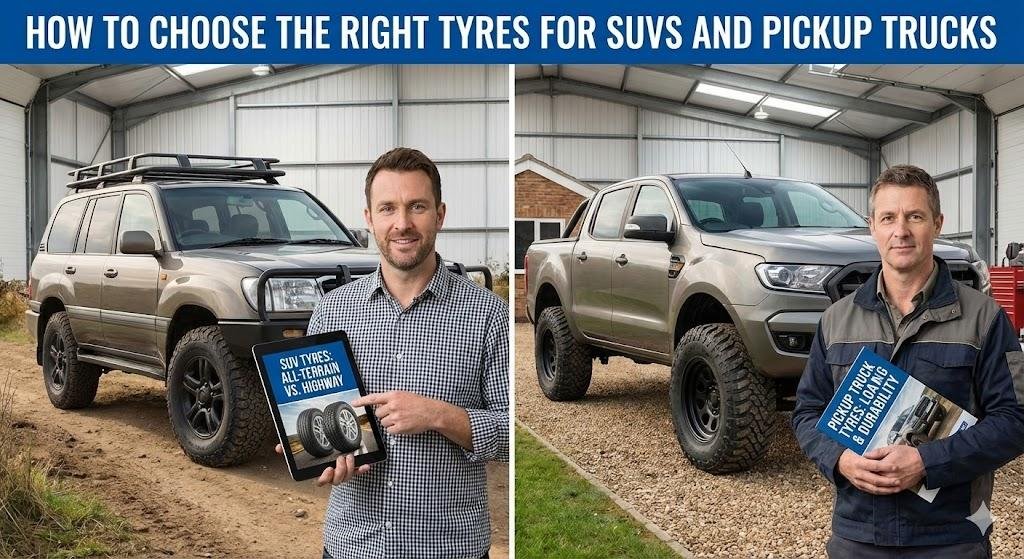
SUVs and pickup trucks dominate the roads in the United Arab Emirates. These powerful vehicles require specific equipment to perform safely and efficiently. The most critical component for any vehicle is the rubber that meets the road. However, selecting the right SUV and pickup truck tyres is often more complex than for standard cars.
These vehicles carry heavier loads and often tackle diverse terrains. Making the wrong choice can compromise safety and reduce vehicle lifespan. Drivers need to consider factors like heat resistance and load capacity. Ignoring these elements can lead to premature wear or dangerous blowouts.
This guide explores everything you need to know about making the right selection. From understanding load ratings to navigating hot asphalt, we cover it all. Let us ensure your vehicle is equipped for every journey.
Why Tyre Selection Is Critical for SUVs and Pickup Trucks
SUVs and pickups have a higher center of gravity than sedans. This physics difference means they handle corners and braking differently. Tyres must be engineered to support this unique dynamic safely. If the tyre is too soft, the vehicle may feel unstable during turns.
Additionally, the sheer size of these vehicles places immense stress on the wheels. A standard passenger car tyre is simply not built to handle the forces involved. Using the wrong type can lead to sidewall failure under stress.
Owners must prioritize specific features designed for larger vehicles. This ensures that the vehicle remains controllable in emergencies. It also guarantees that the suspension system works as intended.
Higher Load and Vehicle Weight
These vehicles are significantly heavier than the average passenger car. The tyres must have reinforced sidewalls to support this mass without bulging. A higher load index ensures the tyre will not fail under stress.
When you add passengers, luggage, or cargo, the weight increases further. A pickup truck bed full of equipment requires robust support. Standard tyres would flatten or overheat under such conditions.
Reinforced tyres maintain their shape even when carrying heavy loads. This structural integrity is vital for maintaining grip and handling. It prevents the tyre from overheating due to excessive flexing.
Different Driving Uses Compared to Sedans
Owners often use these vehicles for multiple purposes in one week. You might commute to work, tow a boat, or hit the desert dunes. The tyres need to be versatile enough to handle these shifting demands.
Sedans typically stick to paved roads and consistent speeds. SUVs might climb rocky paths or wade through water. This versatility requires a tread compound that is tough yet flexible.
Understanding your primary use is the first step in selection. A vehicle used only for school runs needs different rubber than a work truck. Matching the tyre to the activity maximizes performance and longevity.
Understanding SUV and Pickup Tyre Types
The market offers a wide variety of tyre categories for larger vehicles. Each category is designed to excel in specific environments. Knowing the difference helps you avoid paying for features you do not need.
Choosing the wrong category can ruin your driving experience. An off road tyre on the highway will be loud and inefficient. Conversely, a highway tyre in the sand will get you stuck immediately.
Let us break down the three main types available. This will help you identify which category suits your lifestyle best. It simplifies the shopping process significantly.
Highway Terrain Tyres
Highway Terrain or HT tyres are designed primarily for paved roads. They offer a quiet ride and maximize fuel efficiency for daily driving. These are ideal for drivers who rarely leave the asphalt.
They feature a rib tread pattern that lowers rolling resistance. This design helps in dissipating heat on long highway journeys. It also provides excellent grip on wet or dry tarmac.
If your SUV is a family hauler, HT tyres are likely the best choice. They provide the comfort of a sedan with the strength of a truck. They are the standard fitment for most luxury SUVs.
All Terrain and Off Road Tyres
All Terrain or AT tyres offer a balance between on road comfort and off road grip. They feature deeper treads to handle sand and gravel effectively. This versatility makes them popular among adventure seekers in the UAE.
They have stronger sidewalls to resist cuts from rocks. While slightly noisier than HT tyres, modern AT designs are surprisingly quiet. They are perfect for the weekend warrior who camps in the desert.
Mud Terrain or MT tyres are for serious off road enthusiasts. They have aggressive tread blocks for maximum traction in loose terrain. However, they can be uncomfortable and loud for daily city driving.
Key Factors to Consider When Choosing Tyres
Walking into a tyre shop can be overwhelming due to the options. You need to focus on the technical specifications written on the sidewall. These numbers tell you exactly what the tyre can handle.
Ignoring these specs can lead to mechanical issues or safety hazards. Your vehicle manufacturer specifies these numbers for a reason. Sticking to them ensures your warranty and insurance remain valid.
You should also consider the age of the tyre. Rubber degrades over time, even if not used. Always check the manufacturing date before purchasing.
Tyre Size, Load Index, and Speed Rating
Reading the sidewall markings is essential for finding the perfect fit. You need to match the size, load index, and speed rating to your vehicle. Deviating from these specs can be dangerous and illegal.
Many SUVs and pickups sold locally are equipped with sizes such as 265/65R17, which offer a balance between stability, comfort, and off road strength. Sticking to the recommended size ensures your speedometer and safety systems work correctly. It guarantees that the tyre fits within the wheel well without rubbing.
The load index is a number that corresponds to the maximum weight capacity. The speed rating is a letter indicating the maximum safe speed. Always ensure the new tyre meets or exceeds the original ratings.
Tread Pattern and Grip Needs
The design of the tread determines water evacuation and grip levels. An aggressive pattern is better for sand but louder on the highway. A ribbed pattern offers stability and silence for long highway trips.
Sipes are small cuts in the tread blocks that improve wet traction. They help the tyre bite into the road surface during braking. This feature is crucial for safety during sudden stops.
Consider how much sand driving you actually do. If it is less than ten percent, an aggressive tread might be overkill. Choose a pattern that suits the majority of your driving time.
How UAE Driving Conditions Affect Tyre Choice
The driving environment in the United Arab Emirates is unique. We face extreme temperatures, abrasive sand, and high speed highways. These factors accelerate tyre wear and tear significantly.
Tyres that perform well in Europe might fail quickly here. The chemical makeup of the rubber needs to withstand the Gulf climate. You need products specifically designed for hot regions.
Understanding local conditions helps you make a smarter investment. It prevents you from buying tyres that will crack or peel after one summer. Durability is just as important as performance in this region.
Heat Resistance and Rubber Compounds
The UAE summer is unforgiving on rubber compounds. Surface temperatures on roads can exceed 60 degrees Celsius. You need tyres with high temperature ratings to prevent blowouts.
Heat causes the air inside the tyre to expand rapidly. It also softens the rubber, making it wear down faster. Premium tyres use silica compounds to resist this thermal degradation.
Look for the temperature rating on the sidewall, usually graded A, B, or C. Grade A offers the best resistance to heat buildup. This is a non negotiable feature for safety in the UAE.
Urban Roads Versus Desert Terrain
City driving involves stop and go traffic that wears brakes and tyres. Frequent turning scrubs the tread edges on abrasive asphalt. You need a durable compound to handle this daily friction.
Desert driving requires the ability to float on sand without digging in. Tyres need to be deflated to increase the contact patch. A flexible sidewall is essential for this type of use.
If you drive mostly in the city, prioritize wear resistance. If you drive in the desert, prioritize sidewall flexibility and strength. Your choice depends on where you spend the majority of your time.
Matching Tyres to Your Driving Habits
Your personal driving style plays a huge role in tyre selection. An aggressive driver needs different tyres than a cautious one. Analyzing your habits ensures you get the best value for money.
Consider the distances you cover daily. Think about the cargo you carry regularly. These factors influence the type of tyre that will serve you best.
Do not just buy what your friend bought. Your needs might be completely different. Tailor your choice to your specific lifestyle.
Daily Commuting and Highway Driving
If you stick to Sheikh Zayed Road, prioritize comfort and longevity. A hard compound touring tyre will last longer and save fuel. There is no need for knobby treads on the school run.
Highway driving generates heat due to sustained high speeds. You need a tyre that dissipates this heat efficiently. Stability is also key for lane changes at 120 km/h.
Low rolling resistance tyres are great for high mileage drivers. They reduce the effort the engine needs to move the car. This saves you money at the petrol pump over time.
Towing, Payload, and Adventure Driving
If you haul heavy loads or tow trailers, you need extra strength. Look for "Light Truck" or LT designated tyres with more ply layers. These resist deformation under heavy weight.
Towing puts massive stress on the rear tyres specifically. Reinforced sidewalls prevent the vehicle from swaying. This stability is critical for keeping a trailer under control.
For adventure driving, look for puncture resistance. Sharp rocks and debris can ruin a standard tyre easily. A reinforced carcass protects against impact damage off road.
Maintenance Tips to Extend Tyre Life
Buying the right tyres is only half the battle. You must maintain them to get the maximum lifespan. Neglect is the number one cause of premature tyre failure.
Simple checks can save you thousands of dirhams. They also ensure your vehicle remains safe to drive. Make tyre maintenance a part of your monthly routine.
Treat your tyres with respect, and they will protect you. Ignore them, and they become a liability. Here are the most effective ways to care for them.
Correct Tyre Pressure and Rotation
Check pressure monthly when tyres are cool. Heat causes pressure to rise significantly. Correct inflation prevents uneven wear and overheating.
Under inflation causes the sidewalls to flex and overheat. Over inflation causes the center of the tread to wear out. Use a quality gauge to ensure accuracy.
Rotate your tyres every 10,000 kilometers. Front and rear tyres wear differently due to steering and power. Rotation ensures they wear down evenly, extending the set's life.
Alignment and Suspension Checks
Hitting curbs or dunes can knock wheels out of alignment. This causes rapid, uneven wear on the tread edges. Regular checks keep the vehicle driving straight and true.
Worn shock absorbers can cause "cupping" on the tyre tread. This leads to a noisy ride and reduced grip. Keep your suspension in good condition to protect your tyres.
If the car pulls to one side, check the alignment immediately. Driving with bad alignment destroys tyres in a very short time. It is a small cost to prevent a large expense.
Common Tyre Buying Mistakes to Avoid
Many drivers make errors that compromise safety and cost money. Being aware of these pitfalls helps you shop smarter. Avoid falling for marketing hype or false economies.
Education is your best defense against bad purchases. Knowing what to avoid is as important as knowing what to buy. Let us look at the most common errors.
Choosing Price Over Performance
Cheap tyres often lack the heat resistance needed for the Gulf. They may save money now but wear out twice as fast. Investing in quality ensures safety for your family.
Budget tyres may also have longer braking distances. In an emergency, this difference can be life saving. Do not compromise on safety features to save a few dirhams.
Value is about cost per kilometer, not just purchase price. A premium tyre that lasts longer is cheaper in the long run. Think long term when making your decision.
Ignoring Manufacturer Recommendations
The manufacturer spent millions testing the best tyre for your car. Changing sizes for aesthetics can ruin handling. Always consult the manual before making drastic changes.
Using the wrong load index is dangerous and illegal. It can void your insurance in case of an accident. Stick to the specifications designed for your vehicle.
Modifying wheels and tyres can also affect fuel economy. Large, heavy wheels stress the engine and suspension. Trust the engineers who built the car.
Frequently Asked Questions
Are SUV tyres different from car tyres?
Yes, they are designed for heavier loads and higher ride heights.
Can pickup trucks use all terrain tyres daily?
Yes, but highway tyres offer better comfort for city driving.
How often should SUV tyres be replaced?
Typically every 40,000 to 60,000 kilometres depending on usage.
Do larger tyres improve off road performance?
Only when correctly sized and matched to suspension and load.
Does UAE heat reduce tyre lifespan?
Yes, high temperatures accelerate rubber wear and pressure changes.
Final Thoughts
Selecting the right rubber is an investment in safety. Consider your environment and driving style carefully. A well chosen set of tyres transforms the driving experience.
Remember to factor in the extreme heat of the UAE. Prioritize load capacity if you use your truck for work. Do not forget the importance of regular maintenance.
By following these guidelines, you ensure reliability and performance. You protect your passengers and your vehicle. Make the smart choice for your next set of tyres.

 English
 Arabic
 French
 Spanish
 Portuguese
 Deutsch
 Turkish
 Dutch
Dutch
 Italiano
 Russian
 Romaian
 Portuguese (Brazil)