

Bremelanotide Production Cost Analysis: Key Factors Influencing Manufacturing Economics
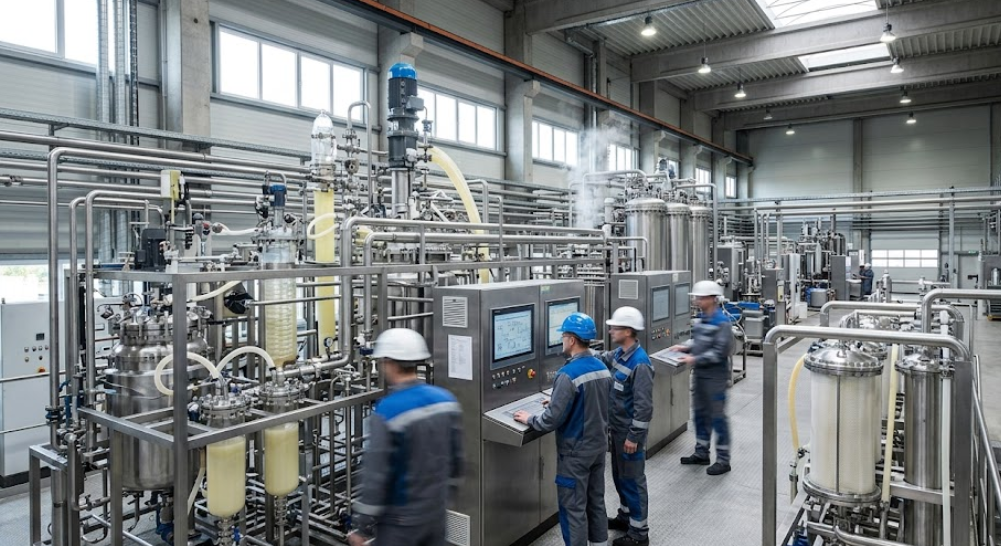
Understanding bremelanotide production cost is increasingly important for pharmaceutical manufacturers, procurement teams, and investors navigating a complex and evolving global market. Bremelanotide, a peptide-based therapeutic, has gained attention due to its clinical applications, driving demand across regulated pharmaceutical markets.
However, the cost of producing bremelanotide is influenced by several dynamic factors:
- Global demand for peptide therapeutics
- Supply chain constraints for amino acids and reagents
- Energy cost volatility affecting synthesis and purification
In this context, a detailed bremelanotide production cost analysis becomes essential for evaluating manufacturing feasibility, optimizing procurement, and ensuring long-term profitability.
Overview of Bremelanotide Manufacturing
Bremelanotide is a synthetic peptide, typically produced through solid-phase peptide synthesis (SPPS)—a well-established method in pharmaceutical manufacturing for complex peptides.
Key Manufacturing Steps:
- Solid-Phase Peptide Synthesis (SPPS):
- Sequential addition of protected amino acids
- Conducted on resin supports
- Requires precise control over reaction conditions
- Cleavage and Deprotection:
- Removal of peptide from resin
- Deprotection of functional groups using strong acids
- Purification:
- High-performance liquid chromatography (HPLC)
- Removal of impurities and by-products
- Lyophilization (Freeze-Drying):
- Converts purified peptide into stable powder form
- Formulation and Packaging:
- Final dosage preparation under sterile conditions
Technologies Used:
- Automated peptide synthesizers
- Chromatography systems (prep-HPLC)
- Freeze dryers (lyophilizers)
- Cleanroom manufacturing facilities
These sophisticated processes significantly contribute to the overall bremelanotide manufacturing cost and capital investment requirements.
Key Raw Materials and Inputs
The bremelanotide plant cost is heavily dependent on high-value raw materials and stringent pharmaceutical-grade inputs.
Primary Inputs:
- Protected amino acids: Core building blocks of peptide synthesis
- Resins: Solid support materials for SPPS
- Coupling reagents: כגון HATU, DIC (for peptide bond formation)
- Solvents: DMF, dichloromethane, acetonitrile
- Cleavage reagents: Trifluoroacetic acid (TFA)
Utilities and Support Inputs:
- High-purity water (WFI – Water for Injection)
- Cleanroom-grade air handling systems
- Electricity for automated systems and cooling
Cost Influence:
- Amino acid pricing volatility directly affects production cost
- High solvent consumption increases operational expenses
- Strict GMP compliance raises input quality requirements
A detailed raw material cost analysis is therefore critical for accurately estimating the cost of producing bremelanotide.
Major Cost Drivers in Production
The industrial production cost of bremelanotide is shaped by multiple cost components, many of which are sensitive to global market conditions.
Key Cost Components:
- Raw Materials:
The largest contributor due to expensive amino acids and reagents - Energy Consumption:
High energy usage in synthesis, purification, and lyophilization - Labor Costs:
Skilled personnel required for peptide synthesis and QC - Quality Control and Compliance:
Analytical testing, validation, and regulatory documentation - Plant Maintenance:
Maintenance of high-precision equipment and cleanrooms - Logistics and Cold Chain:
Controlled storage and transportation requirements
Market Impact:
- Fluctuations in solvent and reagent prices affect margins
- Energy price spikes increase operational costs
- Regulatory changes may increase compliance expenses
These variables play a crucial role in determining the overall bremelanotide production cost analysis.
Regional Cost Differences
The bremelanotide manufacturing cost varies across regions due to differences in infrastructure, regulations, and resource availability.
North America:
- Advanced pharmaceutical infrastructure
- High labor and compliance costs
- Strong regulatory oversight (FDA standards)
Europe:
- Stringent environmental and safety regulations
- Higher energy prices
- Focus on sustainable manufacturing
Asia (India, China):
- Cost-effective labor
- Growing peptide manufacturing capabilities
- Competitive raw material sourcing
Middle East:
- Lower energy costs
- Limited peptide manufacturing ecosystem
- Increasing investments in pharmaceutical infrastructure
Key Influencing Factors:
- Energy pricing differences
- Regulatory frameworks (GMP, environmental laws)
- Availability of skilled workforce
- Scale of production facilities
These regional dynamics significantly influence chemical plant cost analysis and global supply chain strategies.
Impact of Market Trends on Production Economics
The peptide pharmaceutical sector is evolving rapidly, impacting the manufacturing economics of bremelanotide.
Key Trends:
- Green Chemistry Initiatives:
Reducing solvent usage and waste generation - Process Optimization:
Improved synthesis efficiency and yield - Decarbonization Efforts:
Adoption of energy-efficient technologies - Automation and Digitalization:
Use of AI-driven synthesis and process monitoring
Economic Implications:
- Higher upfront capital investment for advanced technologies
- Long-term cost savings through efficiency gains
- Enhanced scalability and reduced batch variability
These trends are reshaping the cost of producing bremelanotide, making innovation a critical factor in cost competitiveness.
Why Detailed Production Cost Intelligence Matters
For industrial stakeholders, access to detailed bremelanotide production cost data is essential for strategic planning and risk management.
Key Benefits:
- Feasibility Analysis:
Assess viability of new manufacturing plants - Procurement Optimization:
Identify cost-effective sourcing strategies - Investment Planning:
Evaluate ROI and capital allocation - Operational Efficiency:
Benchmark and improve production processes
A comprehensive understanding of industrial production cost enables companies to remain competitive in a highly regulated and cost-sensitive market.
The Role of Production Cost Reports in Strategic Planning
A detailed Bremelanotide Production Cost Report serves as a critical resource for understanding manufacturing economics at a granular level.
Such reports typically provide:
- In-depth raw material cost analysis
- Detailed process flow and technology insights
- Capital expenditure (CAPEX) and operating cost (OPEX) breakdown
- Profitability and margin evaluation
- Sensitivity analysis based on market variables
These insights allow manufacturers, investors, and procurement teams to make informed decisions regarding plant setup, scaling, and supply chain optimization.
A well-structured Bremelanotide Production Cost Report enables stakeholders to evaluate production feasibility, benchmark industry standards, and identify opportunities for cost reduction without compromising quality.
Final
The bremelanotide production cost is influenced by a combination of complex peptide synthesis processes, high-value raw materials, energy consumption, and regulatory requirements. As demand for peptide therapeutics grows, understanding the bremelanotide manufacturing cost becomes increasingly important.
Key takeaways include:
- SPPS-based production drives higher cost structures
- Raw materials and purification processes are major cost contributors
- Regional factors significantly impact plant economics
- Technological advancements are reshaping cost efficiency

 English
 Arabic
 Spanish
 Portuguese
 Deutsch
 Turkish
 Dutch
Dutch
 Italiano
 Russian
 Romaian
 Portuguese (Brazil)
 Greek
Greek