

Conoscope Lens for Accurate Display Angle Testing
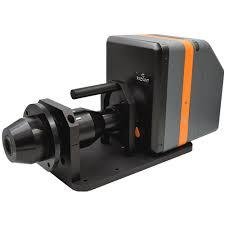
Display manufacturers often struggle to measure viewing angles, light leakage, and uniformity accurately. Traditional measurement tools capture only straight-line light, missing how light behaves at different angles.
A conoscope lens solves this by collecting angular light information from displays and optical surfaces in a single measurement. This helps engineers evaluate true optical performance.
What Is a Conoscope Lens?
A conoscope lens is a special optical lens used in display and optical testing systems. It captures light from multiple angles and projects it onto a sensor for analysis.
Core Structure
-
Wide-angle optical design
-
High precision glass elements
-
Designed for angular light mapping
-
Used with imaging sensors and analyzers
This allows full angular distribution of light to be recorded.
How a Conoscope Lens Works
The lens collects light coming from different directions and maps these angles onto a flat sensor surface.
Angular Light Mapping
-
Captures wide field of view
-
Converts angle information into measurable image
-
Helps analyze brightness and color shift across angles
This provides a true understanding of display performance.
Problems with Traditional Optical Measurement Methods
Older testing methods create limitations:
-
Measure only direct light intensity
-
Require multiple measurements at different angles
-
Time-consuming and less accurate
-
Cannot map full angular distribution
These issues reduce testing efficiency and accuracy.
How Conoscope Lens Solves These Testing Problems
Using a conoscope lens allows full angular analysis in one setup.
Key Improvements
-
Single-shot angular measurement
-
High accuracy and repeatability
-
Faster testing process
-
Detailed viewing angle and uniformity data
This is critical for modern display quality control.
Key Features Important for Engineers
-
Wide angular capture range
-
High optical clarity
-
Precision alignment with sensors
-
Stable measurement results
-
Compatibility with display testing systems
These features improve both speed and reliability of measurements.
Conoscope Lens vs Standard Measurement Lenses
| Feature | Conoscope Lens | Standard Lens |
|---|---|---|
| Angular Light Capture | Very Wide | Narrow |
| Measurement Speed | Fast (single capture) | Slow (multiple steps) |
| Viewing Angle Analysis | Accurate | Limited |
| Uniformity Testing | Detailed | Basic |
| Use Case | Display testing | General imaging |
Conoscope lenses are purpose-built for angular optical analysis.
Real Applications in Industries
LCD, OLED, and Micro-OLED Display Testing
Measures viewing angles and brightness uniformity.
AR/VR Optical Module Testing
Evaluates light behavior in near-eye systems.
Quality Control Labs
Used for repeatable and accurate optical measurements.
Research and Development
Helps in improving display technologies.
Why Manufacturers Prefer Conoscope Lens in Testing
Manufacturers choose this lens because it:
-
Speeds up testing process
-
Improves measurement accuracy
-
Reduces setup complexity
-
Provides detailed optical data
-
Supports advanced display development
It is essential for modern display performance evaluation.
How to Choose the Right Conoscope Lens
When selecting a conoscope lens, consider:
Angular Range Requirement
Ensure it covers required viewing angles.
Sensor Compatibility
Match with your imaging and testing system.
Optical Quality
Check for distortion-free mapping.
Mechanical Integration
Must fit your test bench setup.
Supplier Expertise
Choose vendors experienced in optical testing solutions.
Conclusion
A conoscope lens plays a key role in understanding how light behaves across different angles in displays and optical devices. It removes the limitations of traditional testing methods and provides accurate, fast, and detailed results.
For engineers and manufacturers working on display technologies, AR/VR modules, and optical quality control, the conoscope lens is an essential measurement tool.

 English
 Arabic
 Spanish
 Portuguese
 Deutsch
 Turkish
 Dutch
Dutch
 Italiano
 Russian
 Romaian
 Portuguese (Brazil)
 Greek
Greek